The Quarter-Inch Habit
Consistent margins are the quiet reason some fascias look calm and others look crowded.
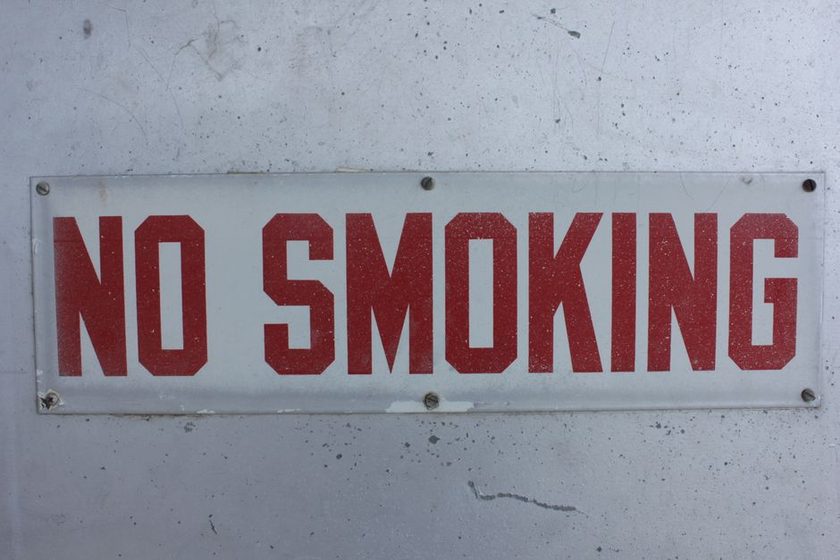
Walk two doors down from a sign that looks right and you will often find one that does not, and the paint itself is rarely the reason. Both boards might carry the same grade of enamel, the same steady brush hand, even a similar letterform. What separates them sits at the edge — a strip of bare board between the last letter and the frame that either holds its width the whole way across or does not. That strip is smaller than most people think to measure, and the shops that keep it consistent are not, as a rule, more talented. They are more consistent.
A Measurement That Isn't a Rule
Ask a working sign painter what margin they use and you will rarely get a number that sounds like law. Somewhere around a quarter inch tends to come up, though it shifts with board depth and letter weight. What matters is less the exact figure than the habit of returning to it, board after board, job after job, until the eye stops having to relitigate the decision every time. That default is what lets a painter start laying out a name plate without first negotiating the edges from scratch — a subject covered in more depth in Reading the Optical Line, which looks at how spacing gets judged by eye rather than by ruler.
A habit like this is closer to a home key on a keyboard than a regulation. It is where the hand returns by default, and where the eye starts checking from. It can move. It just cannot move by accident.
What Crowding Actually Looks Like
Crowding rarely announces itself as a number problem. Nobody stands in front of a fascia and calculates that the margin has drifted from three-eighths to one-sixteenth on the left-hand side. What happens instead is that the eye catches an imbalance before the mind names it — the lettering seems to lean, or press, or run out of room a beat before the board does. The viewer feels the discomfort and blames the composition in general, when the actual fault is a half inch of bare board that quietly disappeared on one side and not the other.
"You don't measure the margin every time. You just never let it slide."
The fix, when there is one, is rarely dramatic. It is usually a matter of shaving a fraction off the wider side and adding it back to the narrow one until the board reads level again — a correction easier to make with a fixed habit to check against than with no reference point at all.
The Quarter Inch on Different Boards
The habit does not scale by simple multiplication. A margin that looks generous on a narrow six-inch nameplate can look stingy on a four-foot fascia board, and one that reads comfortably on a wide board can swallow a small one whole. Painters who work across many board sizes tend to describe the habit less as a fixed measurement and more as a proportion they have internalized — a starting ratio that gets adjusted the moment the board size changes. The process of setting that starting point before any chalk line goes up is its own discipline, one described at length in Scaling a Fascia by Eye.
On a wide bulletin board, a quarter inch is barely visible as a gap. On a six-inch nameplate, that same width can occupy close to a tenth of the whole field — enough to shift the entire composition toward one side if the painter is not deliberately compensating for scale.
Margins by Board Type
The habit still has to answer to the object it is applied to. A rough guide, drawn from how the margin tends to get handled across common board types, looks something like this:
| Board type | Typical depth | Margin instinct | Common slip |
|---|---|---|---|
| Long fascia board | 10–14 in. | Fixed edge, held end to end | Margin drifts wider near the ends |
| Hanging bracket sign | 18–24 in. | Slightly wider top and bottom | Uneven margin front to back |
| Gold leaf window lettering | Pane-dependent | Margin reads relative to frame, not glass | Centering on the pane instead of the frame |
| Small nameplate | 4–6 in. | Margin shrinks proportionally, not linearly | Applying the full-board habit at small scale |
| Sandwich board panel | Full panel | Wider margin, viewed close and at an angle | Copying a fascia margin at eye-level distance |
Where Judgment Still Overrides the Habit
None of this makes the quarter inch sacred. A habit exists to be departed from on purpose, not ignored by accident, and there are situations where holding to it produces a worse result than breaking it. Among the more common ones:
- A board mounted where it will always be viewed at a sharp angle, where the far margin needs to read wider to appear even from the street.
- A board with a warp or bow already in the wood, where a perfectly even margin would actually look crooked against the visible curve.
- A corner installation, where two boards meet and the margins have to negotiate with each other rather than with a single flat edge.
- A very short run of text on a very wide board, where a mechanically even margin leaves the composition looking abandoned in the middle.
In each case, the point is not that the habit fails. It is that the habit was never meant to replace looking. It exists so the painter has something dependable to look from.
Keeping the Habit After the Job Is Done
Margins matter again years after the first coat dries. A hand-painted board gets touched up, not replaced, and a painter returning to redo lettering on old enamel is working within margins someone else set. Holding to the same habit on a repaint keeps the sign looking like itself across decades rather than like a series of separate decisions stacked on top of one another. That continuity is part of what gives an old painted board its particular calm — a quality explored more broadly in the shop's notes on why paint tends to age more gracefully than film-based lettering.
This is an observational essay about layout habits in hand-painted signage, written from general practice in the trade rather than as a step-by-step guide for a specific job. Board size, mounting height, and viewing distance all change how a margin should actually be set — a working painter's own eye remains the final check.