Journal / Materials
MaterialsEnamel Over Steel
The old boards on the corner store have outlasted three generations of plastic signage.
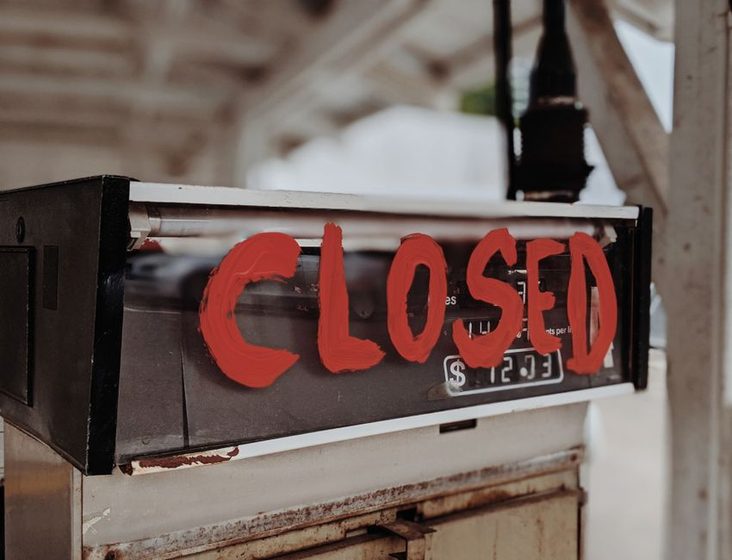
Walk two blocks through any older commercial strip and you'll likely pass a steel bulletin panel that's been on the wall since before the shop had its current owner — paint chalked pale at the edges, a thin rust line bleeding from one bolt hole, the lettering still perfectly readable from across the street. A few doors down, a vinyl banner from two summers ago has already gone the color of weak tea, its corners curling off the substrate like old wallpaper. Neither sign was cheap. Only one of them was built with the expectation of still being there in thirty years.
What a Bulletin Panel Actually Is
Most of what gets called "enamel signage" in the trade today isn't the glass-fused porcelain enamel of old service-station signs — that process, firing powdered glass onto steel in a kiln, is now rare and expensive, kept alive by a handful of specialty shops. What a working sign painter usually means by bulletin enamel is oil-based or urethane enamel paint, hand-lettered or mask-cut, applied over a primed and grounded steel panel. The steel gives the surface rigidity and a flat plane to work on; the enamel gives it color, gloss, and — this is the part that matters here — a binder chemistry built to hold up outdoors for a long stretch of time rather than a single season.
How the Surface Ages, Not Fails
The way enamel ages is gradual and, for the most part, even. Ultraviolet light slowly breaks down the paint's binder, and the pigment that's left behind rises to the surface as a fine, chalky film — the same haze you'd see on an old painted fence. It dulls the gloss and softens the color a shade at a time, across the whole panel at once, rather than in the blotchy patches that plague film-based surfaces. Rust only shows up where the steel itself has been exposed — a deep scratch, an unsealed edge, a bolt hole that was never primed properly.
A panel that's chalking is not a panel that's failing. Chalking usually washes off with a mild detergent and comes back glossy underneath, and a light re-coat over sound paint can carry a bulletin board another decade before anyone needs to touch the steel itself. Panels get pulled down for a new design far more often than they get pulled down because the old one wore out.
Paint doesn't wear out on a schedule the way film does. It just gets quieter, year by year, until someone decides it's time to make it loud again.
Vinyl's Different Clock
Cut and printed vinyl runs on a shorter, more mechanical timeline. The UV stabilizers mixed into the PVC film deplete on something close to a fixed schedule — commonly somewhere in the three-to-seven-year range, depending on grade, laminate, and how much direct sun the install gets. But the film itself is rarely the first thing to go. It's usually the adhesive underneath that lets go first, and it tends to fail at the edges before anywhere else: corners lift, cut lines silver where daylight sneaks in behind the film, and curved surfaces develop pinholes as the vinyl relaxes away from the substrate it was stretched onto. We went deep on the pigment side of that failure in Why Vinyl Fades and Paint Doesn't, but the practical consequence is simple: when a vinyl panel fails, there's usually nothing to touch up. The whole skin comes off and a new one goes on.
In practice, what shows up first on an aging vinyl install tends to be one of a short, repeatable list:
- Uneven fading, with sun-facing sections noticeably duller than shaded ones
- Edge lift where the adhesive first loses its grip on the substrate
- Silvering along cut lines, where trapped air scatters light under the film
- Pinholing on curved or textured surfaces as the film gradually relaxes
Acrylic and the Trouble With Looking Through Something
Printed or routed acrylic panels — common on backlit cabinet signs — carry a different problem entirely, because the acrylic isn't just a mounting surface, it's an optical one. Light has to pass through it, so any change to the plastic itself changes how the lettering reads, not just how the surface looks. Acrylic yellows slowly under UV exposure, and because a printed or vinyl-faced layer often sits sandwiched behind it, the panel is effectively aging in two places at once — the surface graphic and the substrate it's mounted behind. Thermal cycling adds a second front: acrylic expands and contracts more than steel does, and mounting holes drilled without enough clearance can develop hairline cracks over repeated freeze-thaw seasons, long before the graphic itself looks noticeably worn.
A Rough Comparison, Measured in Years
None of these numbers are guarantees — exposure, climate, and install quality all move them around — but they're a fair sketch of what tends to happen to each surface outdoors over time.
| Surface | First visible change | What actually fails | How it's usually addressed |
|---|---|---|---|
| Bulletin enamel on steel | Roughly 8–12 years | Binder chalks; gloss dulls evenly | Wash and re-coat, or repaint in place |
| Porcelain (glass-fused) enamel | 20+ years | Chipping, only at impact points | Rarely needed; panel otherwise stable |
| Cut vinyl film | Roughly 3–7 years | Adhesive lifts; color shifts unevenly | Full re-skin, not a spot repair |
| Printed acrylic panel | Roughly 5–10 years | Substrate yellows behind the graphic | Panel replacement, rarely repairable in place |
Why the Choice Isn't Really About the Sticker Price
An enamel panel almost always costs more up front than a printed vinyl banner of the same size, mostly because of the labor — hand-lettering or careful masking, a proper primer schedule, time for the paint to cure. It's tempting to read that gap as the whole story. But stretched over a twenty- or thirty-year horizon, the math tends to flip: a vinyl install that gets re-skinned every five or six years compounds its labor and material cost several times over, while an enamel panel that only needs an occasional wash and re-coat spends most of that same span doing nothing but sitting there, still legible. We break down what actually goes into that upfront number, line by line, in Pricing a Hand-Lettered Sign — it's rarely just paint and hours.
This piece describes general aging behavior we've observed across enamel, vinyl, and acrylic signage outdoors — it isn't a substitute for a fabricator's assessment of your specific climate, substrate, or exposure. Coastal salt air, high-altitude UV, and heavy freeze-thaw cycles can all shift these timelines in either direction.