Gold Leaf in Three Passes
Sizing, laying, and burnishing — the sequence that keeps leaf from lifting.
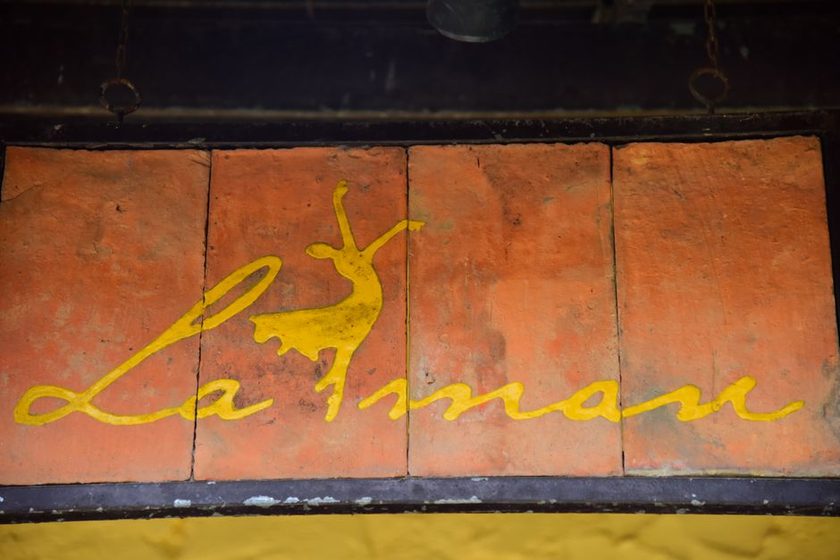
A sign painter named Rosalind kept a jar of skewings on her bench for years — torn scraps of gold leaf that never made it onto a board, saved out of habit rather than thrift. Each scrap marked a small failure: leaf that folded before it touched the size, or leaf that lifted at the corner three weeks after the sign went up. Gold leaf lettering looks like one confident gesture from the sidewalk, but it is built in three separate passes — sizing, laying, and burnishing — and each runs on its own clock. Skip the order or rush the middle step, and the gold tends to tell on you eventually, usually after the ladder is already put away.
Quick Size or Slow Oil Size
The first decision is which size to mix, and it has little to do with which one is easier to work with. Quick size — sometimes called glass size, thinned with water — sets in a matter of minutes and suits gilding indoors or on glass, where the leaf never has to survive weather. Slow oil size is a different material entirely: a linseed-oil medium that stays workable for hours rather than minutes. For exterior lettering — the gold on a fascia board or a pub sign — oil size is close to the only sensible choice, because it cures into a film hard enough to hold leaf through rain and UV without ever sitting soft underneath. Painters who reach for quick size outdoors because a job is running late are usually the same painters restocking their leaf a season on.
Reading the Tack Window
Oil size doesn't announce when it's ready. It goes on wet, dulls as the oil starts to set, and passes through an open window — often several hours, depending on humidity and the size's own formula — where it is tacky rather than wet or dry. Painters test it with a knuckle: touch the size and lift away cleanly, with a faint drag but nothing transferring to the skin, and the tack tends to be right. Touch it too early and the leaf sinks in unevenly, dulling instead of mirroring. Touch it too late and it simply won't grip — it sits on top, then flakes off the first time someone brushes past. The tack window is the part of the job deadline pressure can't rush, which is exactly why it usually gets rushed anyway.
Gold doesn't forgive impatience. It just waits until the ladder's put away to show you where you rushed.— Marcus Yun, gilder
Laying the Leaf Without Breathing on It
Loose leaf is gold beaten thin enough that a stray breath can fold it before it reaches the size. Most painters work with a gilder's tip — a wide, nearly weightless brush charged with a trace of static from being drawn across the hair or a scrap of leather, just enough to lift a sheet without touching it. The leaf is carried to the size and laid down in overlapping sections, working from one edge of a letter to the next rather than covering a whole stroke in one motion. What doesn't stick — the skewings — gets swept off with a soft mop brush once the section is covered, then kept or discarded depending on how much scrap a shop wants around for touch-ups.
- Gilder's tip — for lifting and placing loose leaf without touching it
- Gilder's cushion and knife — for cutting transfer leaf to size before it's lifted
- Soft mop brush — for pressing leaf into size and clearing skewings
- Cotton wool — for the final burnish once the size has cured
Burnishing and Where Leaf Actually Cracks
Once a section is laid and the skewings are cleared, the leaf still isn't finished — it's resting on the size, not bonded to it evenly. Burnishing, a light circular pass with cotton wool or a soft brush, seats the leaf into the tack and brings up the shine that lets gilded lettering read from across a street. The mistake behind most cracked and peeling leaf on old boards happens right here: burnishing before the size has cured through underneath. The surface can look ready long before the oil size has actually set at depth, and a firm burnish on size that's still soft in the middle drags the leaf instead of polishing it, tearing tiny fissures that widen as the board flexes with temperature. The fix isn't gentler technique — it's waiting a day longer than instinct says is necessary.
Most lifting and cracking traces back to one of three shortcuts, not to the gold itself.
- Laying leaf before the size has reached an even tack across the whole letter, not just its center
- Burnishing before the oil size has cured through, rather than just on the surface
- Skipping the isolating varnish coat before painting an adjacent color over the leaf's edge
Quick Size vs. Slow Oil Size
The two sizes aren't interchangeable, and the table below reads more like a field guide than a fixed formula.
| Property | Quick (Glass) Size | Slow Oil Size |
|---|---|---|
| Typical set time | A few minutes | Several hours |
| Open tack window | Brief, easy to miss | Wider, more forgiving |
| Best suited to | Interior and glass gilding | Exterior lettering and fascia work |
| Weather tolerance once cured | Limited | Considerably better outdoors |
| Common failure if rushed | Dull, uneven leaf | Leaf that cracks or lifts later |
Sealing the Job
A finished gilding job isn't done once the burnish shines — it still needs an isolating coat, usually a thin shellac or a spar varnish, laid over the leaf before any adjacent color goes on. That coat protects the gold from tarnishing wherever the size hasn't fully sealed it, and keeps a brush from dragging the leaf's edge when the surrounding enamel gets touched up months or years later. Boards that skip this step tend to show their age first at the letter edges, where a scraper or a careless brush eventually catches the gold and pulls a thread of it loose. It's a detail that costs an afternoon and tends to save a decade — the same case we make for enamel on steel outlasting newer materials, and for why paint tends to hold its color longer than vinyl film in direct sun.
This piece describes a traditional gilding sequence as practiced in sign shops. Set times, tack windows, and cure times vary with humidity, temperature, and the specific size a shop mixes — treat the ranges above as a starting point to test on scrap board, not a fixed recipe for a live job.
More From the Journal
 Reading the Optical Line
Why a ruler gets the spacing wrong and a trained eye gets it right.
→
Reading the Optical Line
Why a ruler gets the spacing wrong and a trained eye gets it right.
→
 The Quarter-Inch Habit
Consistent margins are the quiet reason some fascias look calm and others look crowded.
→
The Quarter-Inch Habit
Consistent margins are the quiet reason some fascias look calm and others look crowded.
→
 Pricing a Hand-Lettered Sign
What actually goes into a quote — surface prep, layout time, and the leaf itself.
→
Pricing a Hand-Lettered Sign
What actually goes into a quote — surface prep, layout time, and the leaf itself.
→